Case Studies

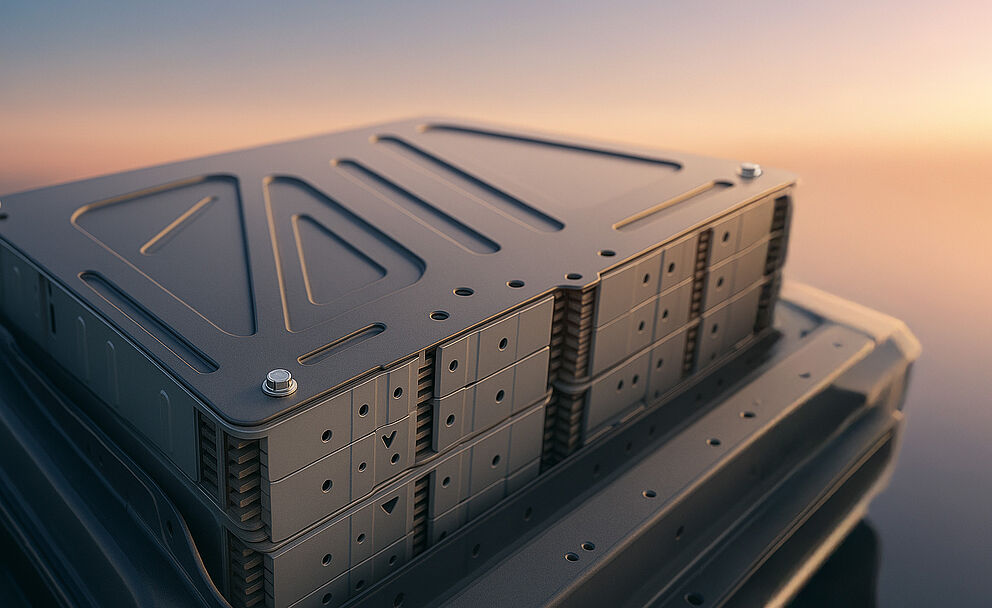
Battery module mounting

PRECISE, SAFE, COST-EFFICIENT: OPTIMIZED BATTERY BONDING

When bonding battery modules in the premium e-segment, safety, temperature resistance, and 
reliable handling are key—and that's with up to 60 molded parts per vehicle.

The customer approached us with specific material specifications and an initial idea for the design.

However, the project quickly revealed that costs could be significantly reduced and the assembly process simplified by using a smart alternative material and a different handling solution.

This case study shows how we saved 60% in material costs while achieving faster, safer processing.

INITIAL SITUATION

When developing modern electronic components for vehicles, every detail counts. A customer from the automotive industry faced a demanding challenge: a component installed on a printed circuit board was being disrupted by external radiation, which led to functional impairment that jeopardized series production approval.

The goal was to find a solution that would reliably shield the component without having to change the existing design. At the same time, the structure had to be designed in such a way that it could be easily integrated into series production.

challenge

The case clearly showed why standard products often reach their limits. Simple shielding was not enough—it would inevitably have caused short circuits between adjacent conductor tracks. Even a purely insulating layer without metallic components would not have sufficiently reduced the interference.

In addition, the material not only had to be electrically and mechanically suitable, but also had to meet the strict requirements of the automotive industry – especially in terms of temperature resistance, UL certification, and processability in series production. The solution: a hybrid material consisting of a polymer matrix reinforced with glass fibers and a conductive filler. This material not only meets the electrical and mechanical requirements, but also satisfies the stringent requirements of the automotive industry.

An off-the-shelf solution was therefore out of the question. A material concept was needed that would meet all requirements at the same time.

In summary:

  • Shielding against radiation
  • Electrical insulation
  • Mechanical fixation
  • Compliance with strict tolerances and UL requirements
Our approach

Manufacturer-independent material selection: 
Because we are not tied to a single manufacturer, we can compare, combine, and coordinate materials from different suppliers. This allows us to precisely meet specific requirements—regardless of where the material comes from. 

This freedom is a decisive advantage when standard solutions are not sufficient. It allows the best properties from different material worlds to be combined, rather than being limited to what a single manufacturer offers.

Our solution

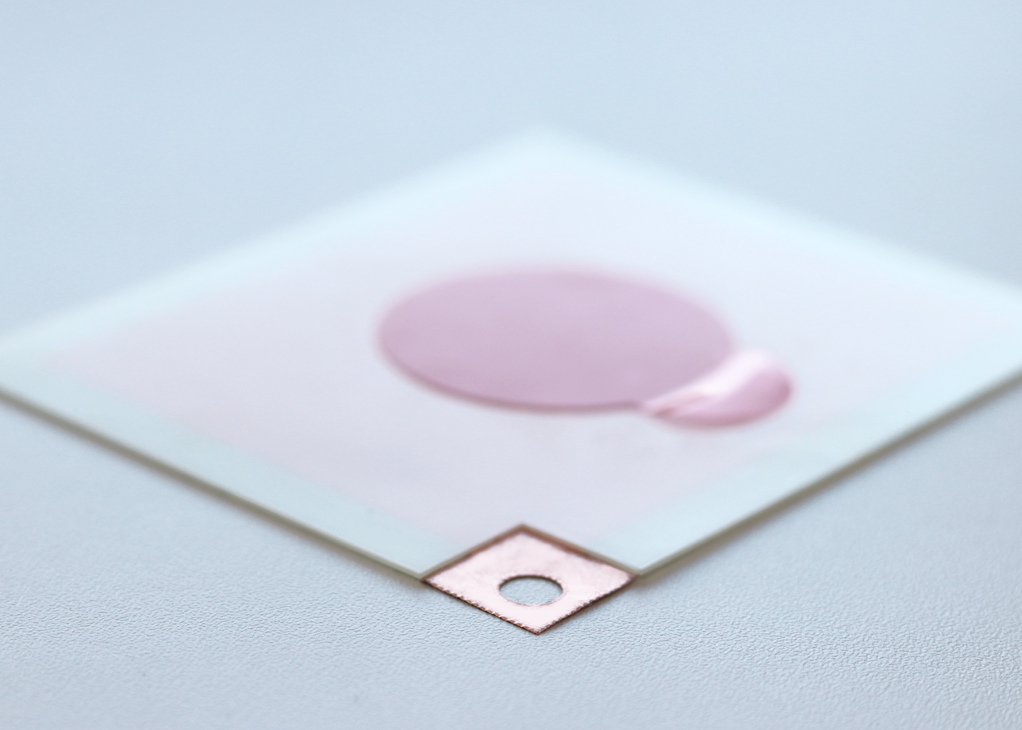
Based on this flexibility, a three-layer structure was developed that met all requirements.

1. Copper foil with electrically conductive adhesive (3M)

  • Reliably shields the component against external radiation and ensures stable electromagnetic shielding.

2. PET insulation material (DuPont)

  • Prevents electrical connection between the conductor tracks. Without this layer, the copper foil would have electrically connected adjacent components.
    Only a defined contact area was deliberately left exposed to ensure electrical connection.

3. Adhesive point with UL-listed adhesive (tesa)

  • Secures the structure from above and maintains its exact position throughout the entire assembly process.
  • UL certification ensures that the structure also complies with safety requirements.

The entire sandwich structure was manufactured in our assembly department as a complete, ready-to-install solution – ready for installation, reproducible, and tested.

The result

The result was impressive across the board: 

  • The source of interference was reliably shielded.
  • The layout of the printed circuit board remained unchanged.
  • The design was easily transferred to series production.
  • The cross-manufacturer comparison enabled costs and delivery times to be optimized.

This resulted in multiple benefits for the customer—technically, economically, and organizationally.

Instead of relying on the limitations of a single manufacturer, we utilized the entire spectrum of the market to create a solution that was a perfect fit.

Our conclusion

Manufacturer independence is not an end in itself—it is a strategic advantage. It enables solutions that are technically better, economically more efficient, and more secure in the long term. Especially in the automotive industry, where every detail counts, this flexibility is crucial for implementing projects in a stable and sustainable manner.

As a specialized converter, we combine expertise, experience, and material diversity to develop the optimal solution for every application—independent of the manufacturer, but always with the highest quality standards.

Why INNO TAPE

With almost 20 years of experience in adhesive tape converting for the automotive industry, we combine technical expertise with process understanding. We think beyond adhesive tape—we think about optimal assembly. From prototypes to series production, we develop solutions that work: technically, economically, and reliably.

No matter how far along you are in your project:

We support you and take the work off your hands: as a partner, manufacturer-independent, flexible, and fast.

Kontaktieren Sie uns!