Splicing
adhesive tapes

Why splicing adhesive tapes is crucial
for process stability

In adhesive tape converting, there is a lot of talk about materials: adhesive systems, carriers, liners and multi-layer structures. What is often underestimated, however, is a relatively short section of the process – the roll change. More specifically: the splice.

Yet it is precisely this transition that determines whether a process runs smoothly or comes to a regular standstill. Splicing is not a minor detail, but a key factor in series production capability and process reliability.

What does splicing mean in adhesive tape converting?

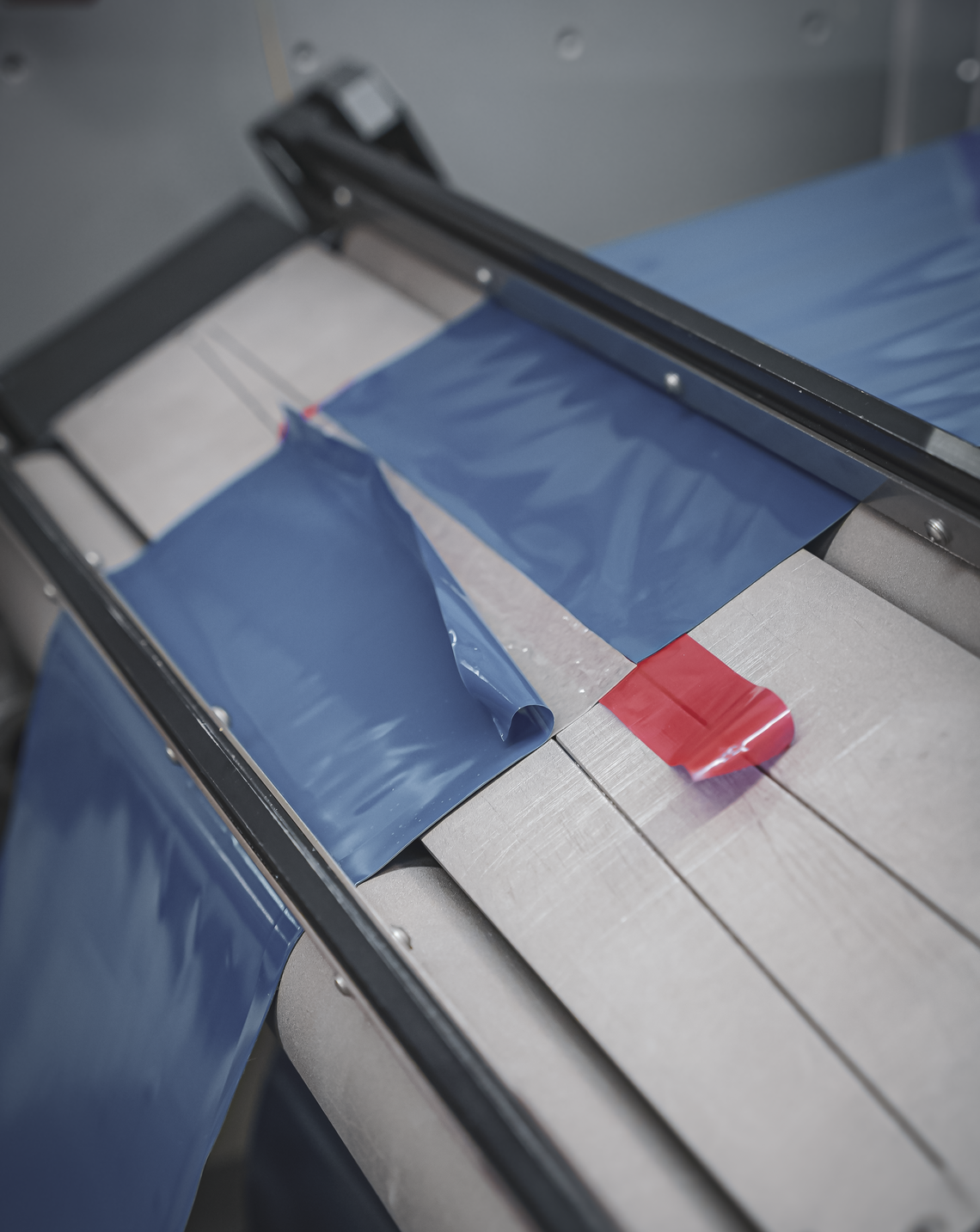
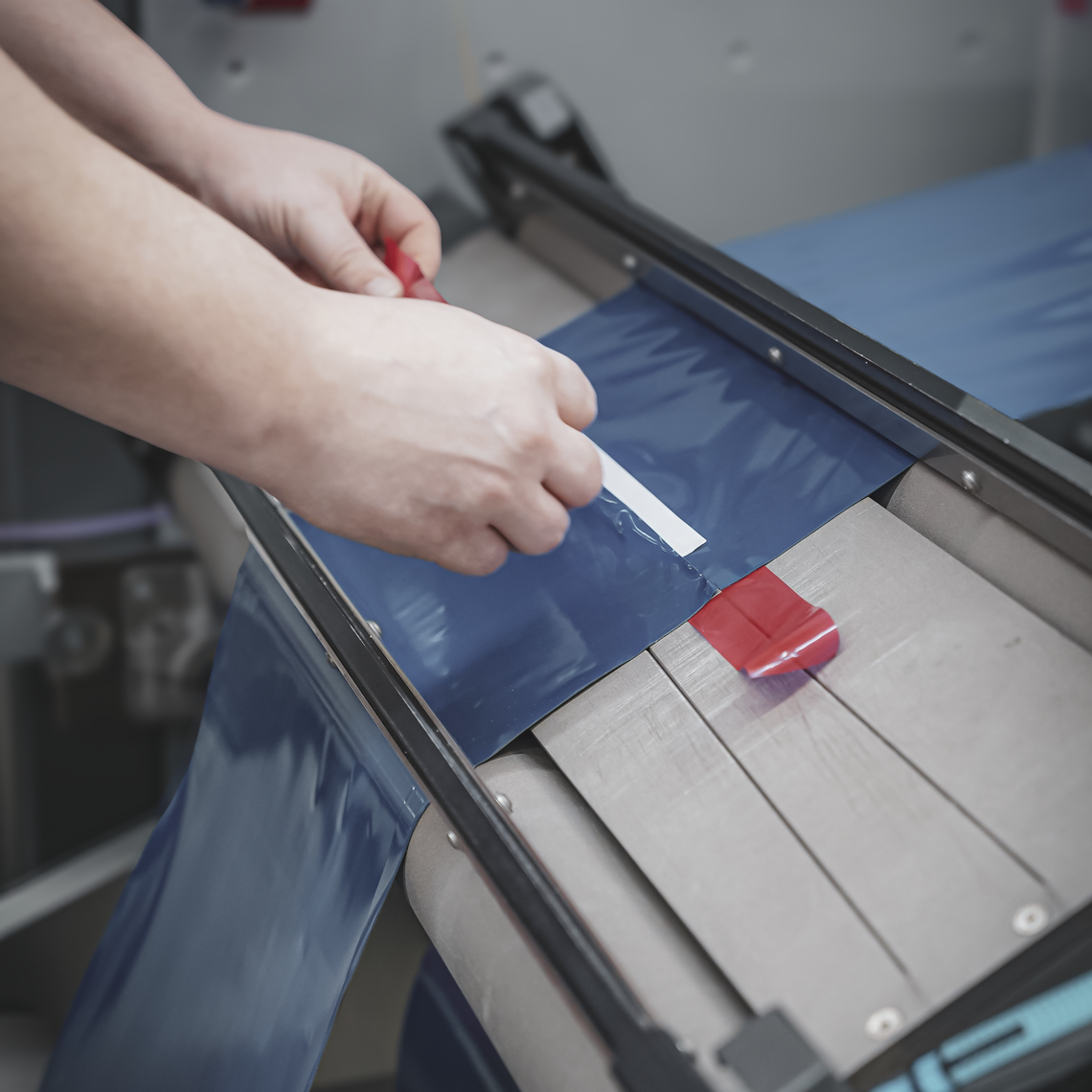
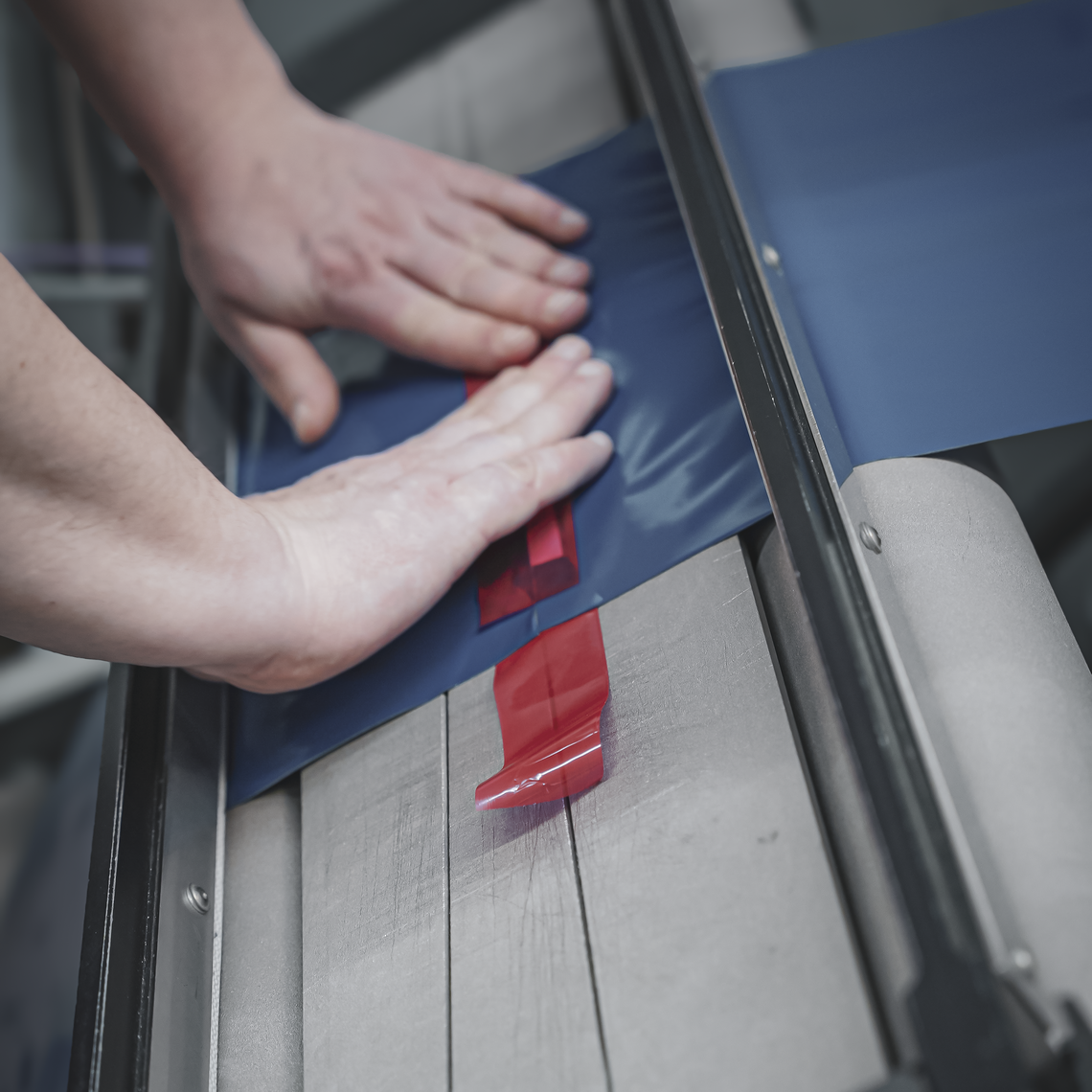
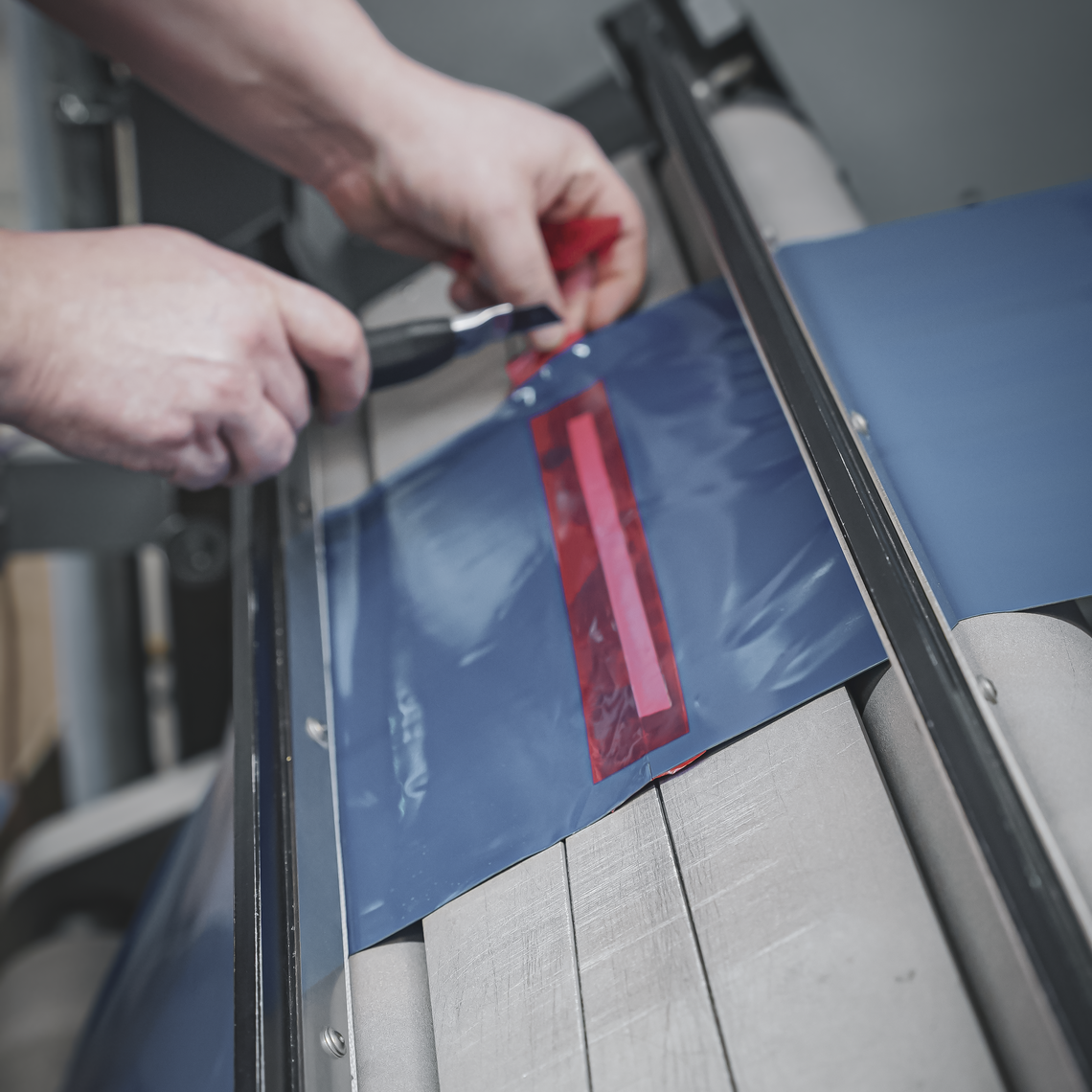
Splicing involves joining two adhesive tape strips together to enable continuous processing.

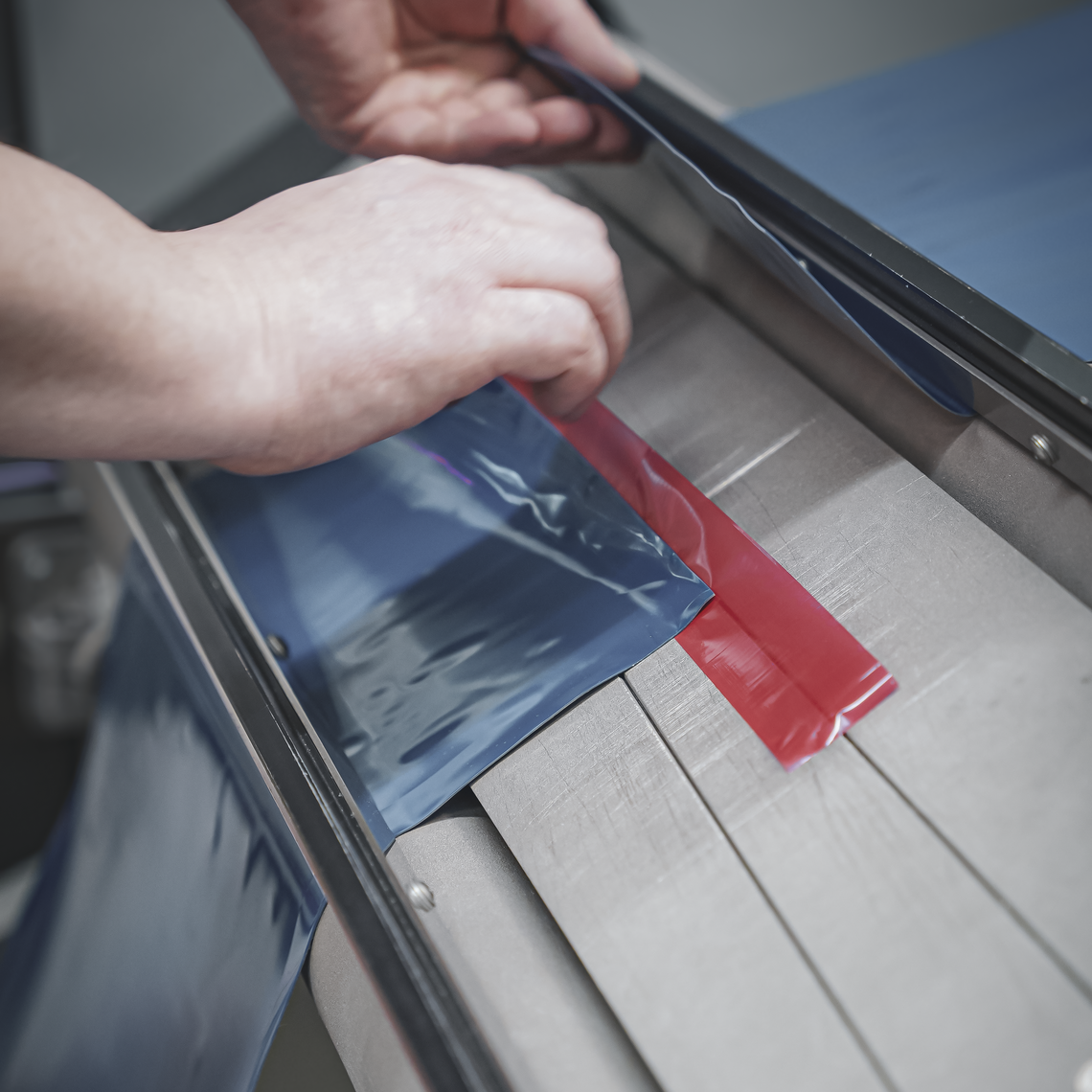
Specifically, this means that a roll of adhesive tape runs through the machine. When this roll is used up, a new roll must be attached so that the process is not interrupted. To do this, the end of the current roll is connected to the beginning of the new roll – this transition is called a splice.

This typically occurs during roll changes, either when the machine is at a standstill or while it is still running.

Important to note: The splice is not a product feature, but rather a process-critical transition within manufacturing. It does not affect the end product itself, but it does affect the path to getting there.

An incorrectly laid splice can cause the web to tear, the machine to stop, tools to be damaged, or dimensional deviations and rejects to occur.

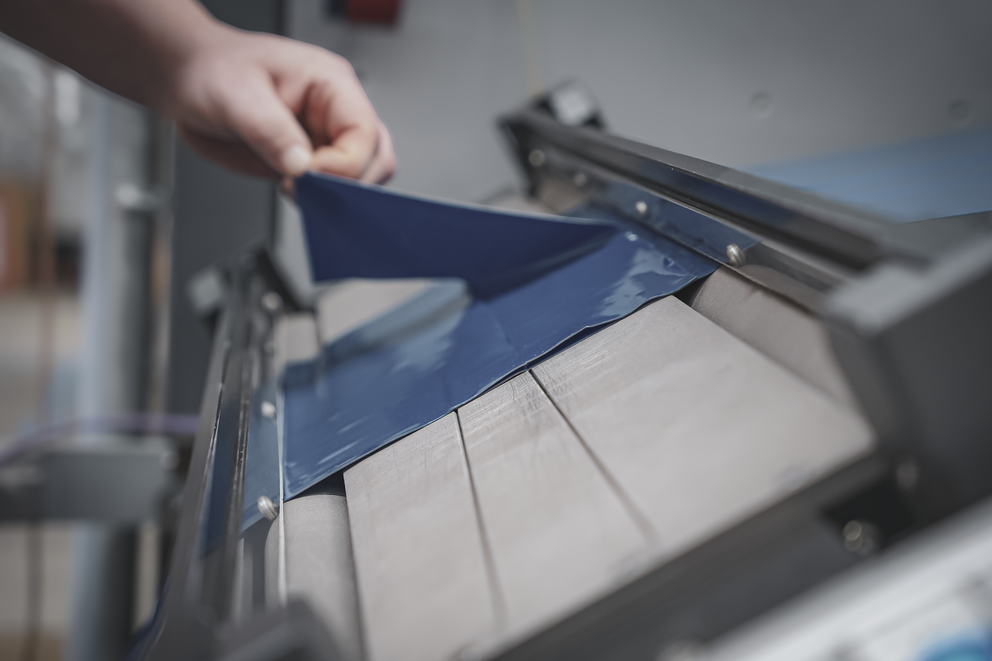
Basic types of splices for adhesive tapes

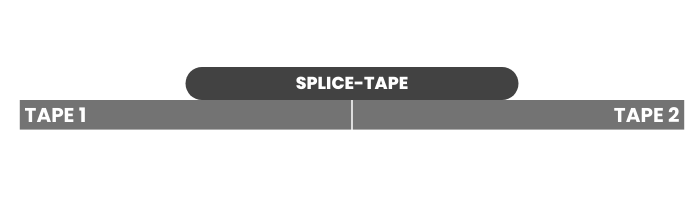
Butt Splice

In butt splicing, two ends of material are joined together without overlapping.
The ends are cut at right angles and then pressed together.

Advantages

  • no thickness build-up
  • suitable for precise further processing

Disadvantages

  • high demands on alignment and adhesive strength
  • limited process reliability with high tensile forces

Butt splices are particularly suitable where
changes in thickness are critical.

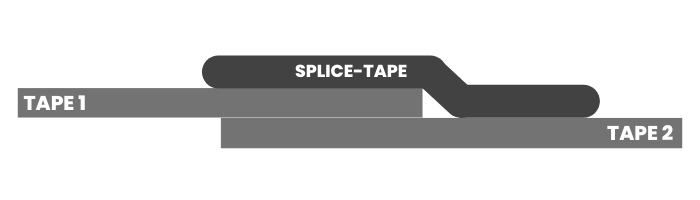
Overlap Splice

In an overlap splice, the new material overlaps the old 
material, usually connected by a splice tape.

Advantages

  • high mechanical stability
  • suitable for high speeds and tensile forces

Disadvantages

  • additional thickness build-up
  • critical in the case of tight tolerances or sensitive tools

The choice between butt splicing and overlap splicing is always 
a process-dependent decision.

What is used for splicing in adhesive tape converting?

Splice Tape

The most common variant. Splice tapes are special double-sided adhesive tapes with:

  • very high initial adhesive strength
  • defined shear strength
  • usually thin, stable carriers (e.g. PET)

The decisive factor here is not only liability, but also:

  • the adhesive system (acrylic, rubber, silicone)
  • temperature and ageing behaviour
  • compatibility with the adhesive tape to be processed
Liner Splice

Here, the connection is made exclusively via the cover liner, not via the product itself.

Advantages

  • product remains unaffected
  • no change to the adhesive side

Restrictions

  • limited tensile strength
  • not suitable for high speeds

Liner splices are used when the product itself must not be affected.

Product splice

The splice is made directly using the adhesive tape product.

This variant is possible, but critical and rarely used:

  • additional thickness build-up
  • potential disruption in further processing
  • often not permitted in the end product

Product splices are usually only acceptable if the splice point is later safely removed.

The splicing process

Positioning

A splice is unavoidable. However, the crucial factor is where it occurs in the process.

An incorrectly positioned splice can damage the tool, cause dimensional deviations and trigger unplanned downtime.

In practice, this means:

  • placement outside the usable or punched contour
  • sufficient distance from sensitive process stations
  • ideally defined rejection zones

Detection

In order for a splice to be processed in a controlled manner, it must first be detected. The aim of detection is not to avoid the splice, but to guide it through the process in a targeted manner.

Typical methods:

  • visual markers or markings
  • defined splice lengths
  • measurable differences in thickness or material
  • specified manual or automatic stop points

A detected splice enables a timely response before critical process steps are reached.

Mistakes in practice

Many splicing problems do not become apparent immediately, 
but only during series operation:

  • incorrect splicing tape
  • Inadequate temperature or endurance testing
  • insufficient overlap
  • failure to take train and speed into account

Often, the cause lies not in the material, but in a lack of 
understanding of the interaction between material and process.

Conclusion

Splicing is not a minor issue in adhesive tape converting, but rather a decisive factor for process stability and series production capability. A good splice is characterised by its reliable hold. However, a very good splice goes even further: it is planned from the outset, precisely positioned and reliably detected.

Get in touch with us

We are at your side from the very beginning and support you every step of the way.
Give us a call or send us an email to start working with us as specialists at your side.

Contact us now

Vanessa Becker

Do you have questions about other topics or would you like to learn more about specific applications? Then feel free to contact me.


I am looking forward to your input for our blog!

vbe@innotape.de