The pull tab

The
Pull tab

The differences and manufacturing variants of pull tabs

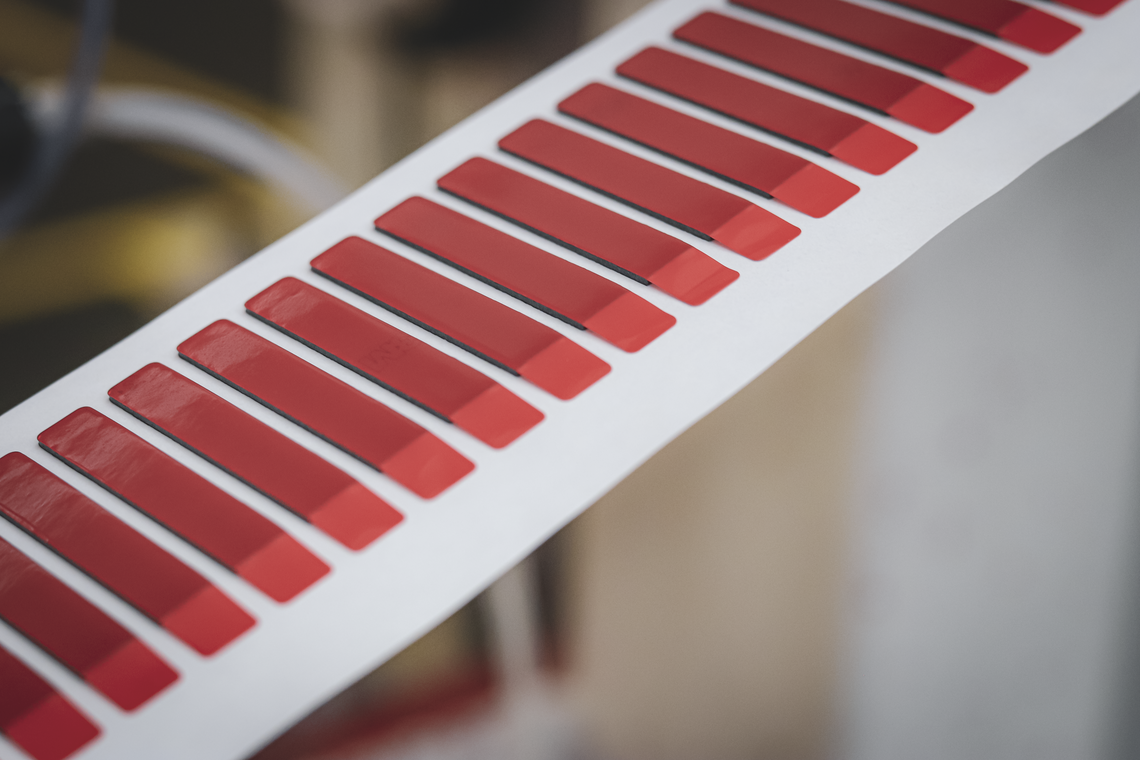
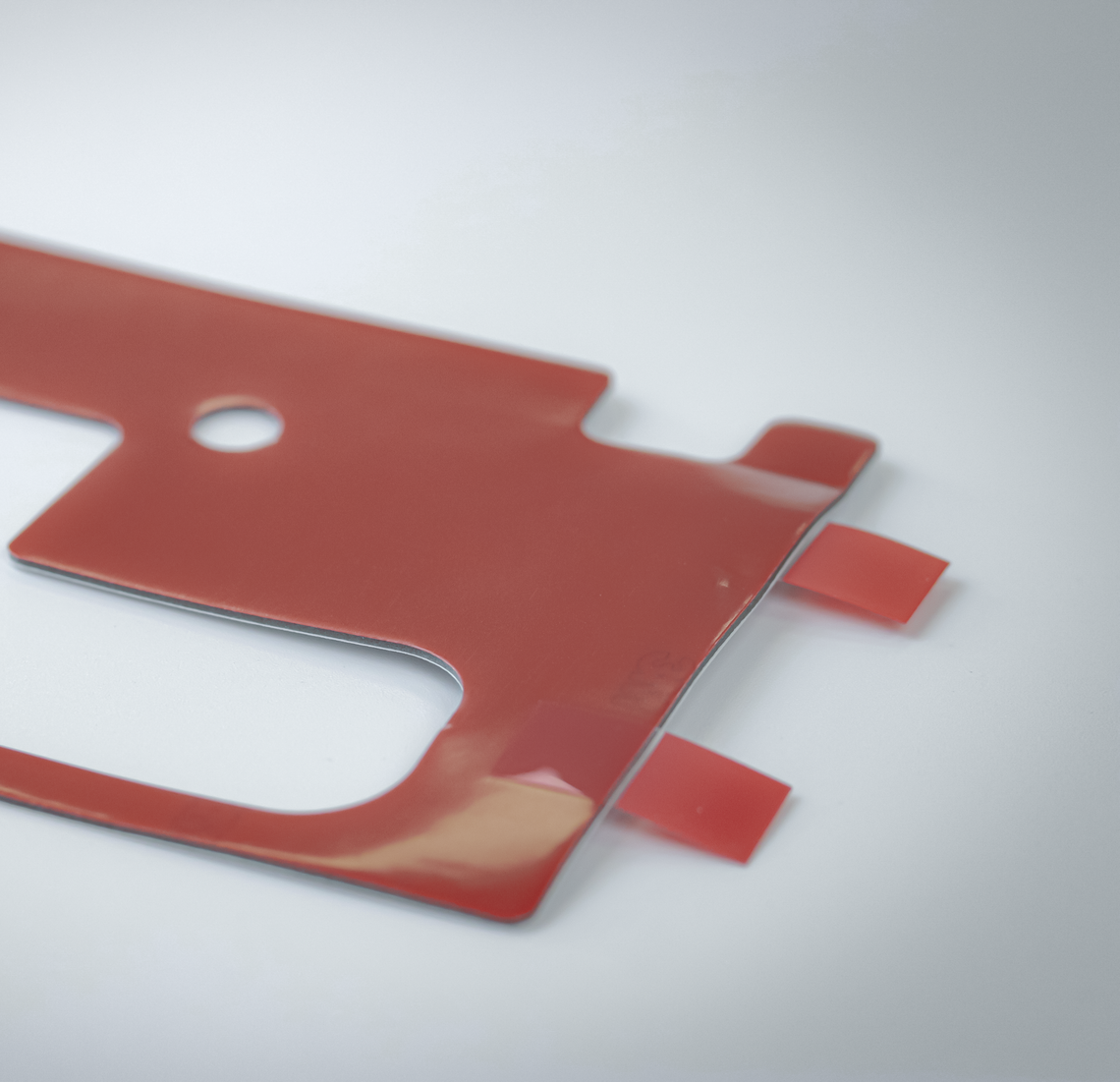
Handling during further processing also plays an important role in ensuring that moulded parts can be glued precisely and easily. For this purpose, so-called pull tabs can be added to the component. These create an area where the part can be handled without touching the adhesive surfaces. The tab protrudes beyond the component and can be designed in different sizes. This makes further processing considerably easier and can be individually adapted to the respective joining process. 


The targeted use of pull tab not only improves handling and ergonomics, but also increases process reliability. In particular, contact with the adhesive surfaces is avoided, which has a positive effect on adhesive quality and reproducibility.

While pull tabs primarily facilitate handling in manual processes, they play a crucial role in automated or semi-automated applications in terms of cycle time, gripability and process stability.

However, pull tabs are neither standardised nor regulated.
The following section therefore presents different variants and manufacturing methods.

The manufacture of pull tabs

There are various ways to make a pull tab.

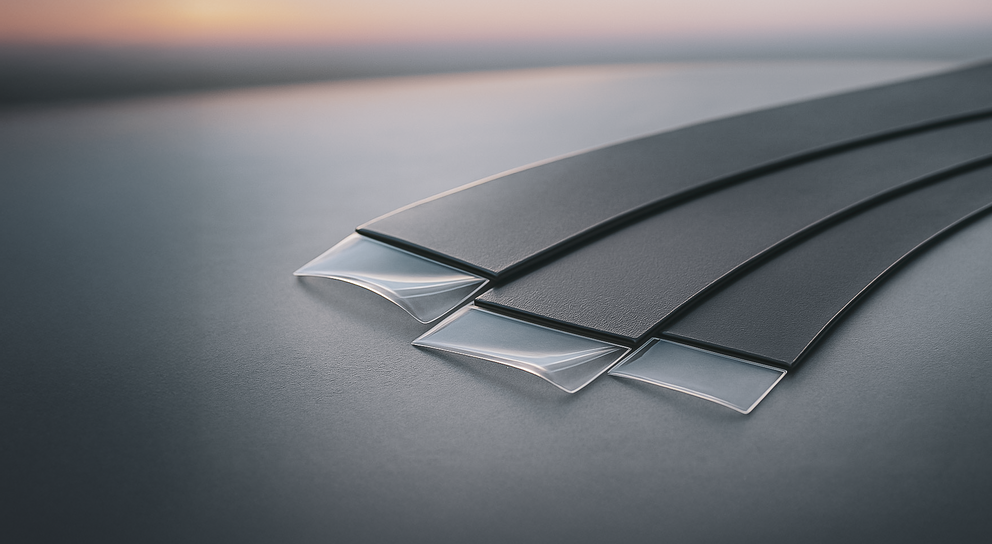
The most common manufacturing method is to use a tab from the liner. The protruding liner serves to cover the adhesive layer on one side and extends beyond the moulded part at a defined point on the other side, allowing the film to be gripped there. This variant is therefore also referred to as a pull tab with liner protrusion. The main advantage of this method is that no additional assembly process is required on the moulded part, as the protrusion can be created directly during laser cutting or punching.

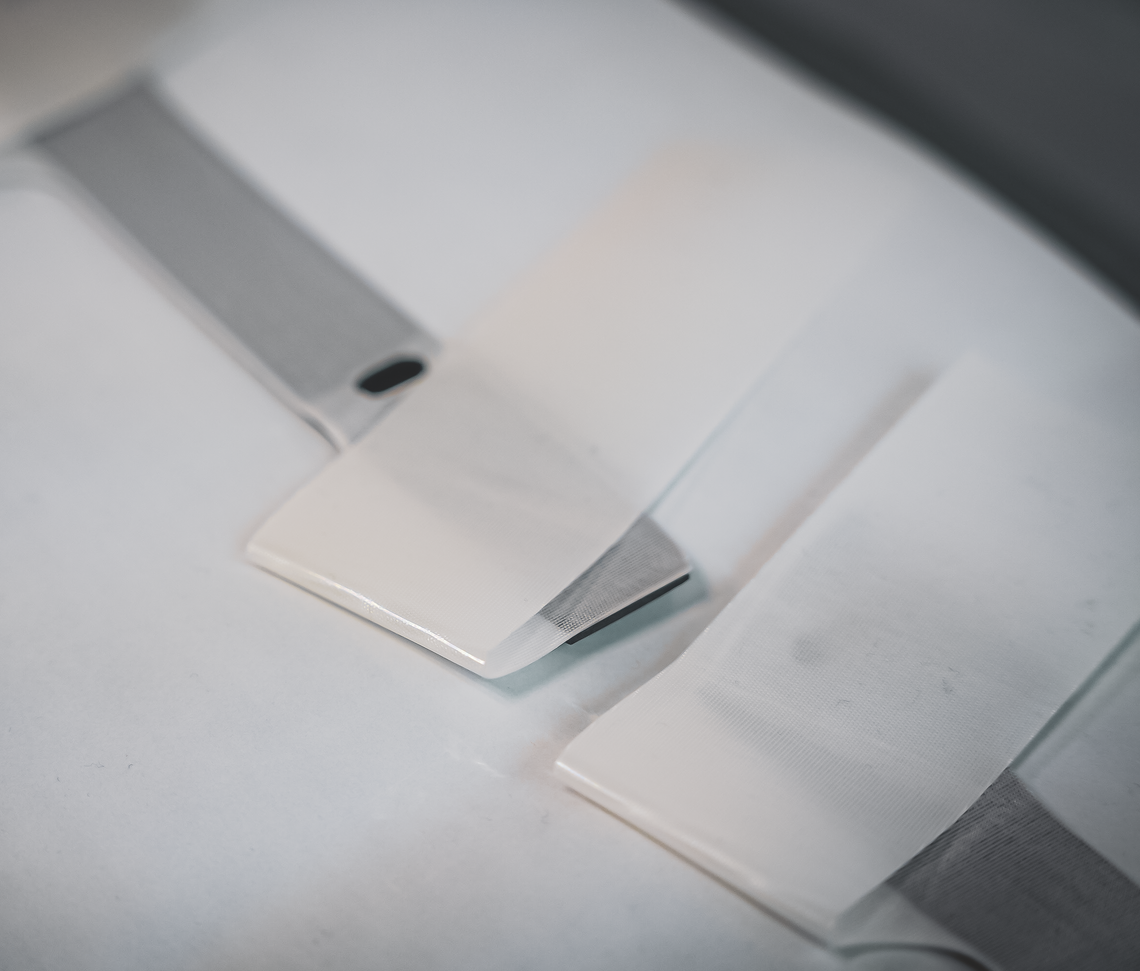
Another variant is handle tabs that are manually bonded to the moulded part. These are usually prefabricated standard tabs in various sizes and lengths. Once the moulded part has been completed, these are applied flush across the entire surface of the liner.

The most suitable method depends on the moulded part in question, the requirements and the production process. Cost also plays a significant role. However, there is no one-size-fits-all standard solution – instead, the best solution for the pull tab is determined on a case-by-case basis.

Individual production

through converting

We can also integrate the tab into our converting process, where no standard dimensions are available. Individual production is therefore very flexible, as we can produce not only the length, but also the position or number of grip tabs according to the customer's wishes.


Multiple pull tabs

in one process

If two or more pull tabs are required on a moulded part, this can be achieved by replacing the liner, for example. This allows the moulded part to be better customised and specifically adapted to our customers' processes. In this context, the pull tabs on one and the same moulded part can even have different lengths.

Advantage: The adhesive surfaces can be joined in individual steps – for example, first the front and then the back. Alternatively, the liner can also be processed separately, resulting in a clearly structured step-by-step sequence.

Advice: If a liner change is necessary, different liner colours can be used. This allows the various grip tabs to be clearly distinguished from one another visually.


Additional functions

besides touching

The pull tab itself can have a much greater benefit than simply serving as a starting point for removing the liner. For example, fabric-reinforced materials are used, which offer significantly greater robustness in the further processing stage.

In addition, the orientation of the pull tab can also be specifically influenced: it can be glued in the opposite direction to the actual pulling direction. This saves space, as the tab rests on the moulded part, and this design can also offer additional advantages in the further processing stage.

Advice for your proceedings

Are you currently planning a project and want to rely on expertise and experience?
We support you throughout the entire planning process.


The process is already in progress? – No problem!
We are also happy to support existing projects and contribute as partners and problem solvers!

Feel free to contact us 


Vanessa Becker

Do you have questions about other topics or would you like to learn more about specific applications? Then feel free to contact me.


I am looking forward to your input for our blog!

vbe@innotape.de